Calorie Deficit Calculator by Lilbite
Estimate your daily calories for sustainable weight loss.
Your Estimated Calorie Targets
Understanding Calorie Deficits
A calorie deficit occurs when you consume fewer calories than your body burns. This is the fundamental principle behind weight loss. Your body needs a certain amount of energy (calories) to function, known as your Total Daily Energy Expenditure (TDEE) or 'maintenance calories'.
This calculator estimates your maintenance calories using the widely accepted Mifflin-St Jeor equation and your activity level. It then subtracts a certain percentage based on your chosen deficit level (Slow, Moderate, Aggressive) to determine your target weight loss calories.
- Maintenance Calories: Calories needed to maintain your current weight (calculated above).
- Weight Loss Calories: Target calories to consume for losing weight (calculated above).
- Deficit Amount: The difference between maintenance and weight loss calories (calculated above).
Sustainable Weight Loss
A safe and sustainable rate of weight loss is generally considered to be 1-2 pounds (0.5-1 kg) per week. This typically corresponds to a daily deficit of 500-1000 calories. Larger deficits can lead to faster weight loss initially, but may also cause muscle loss, nutrient deficiencies, and fatigue, making them harder to maintain long-term.
The 'Aggressive' option provides a larger deficit, which might be suitable for short periods for some individuals, but 'Slow' or 'Moderate' are often better choices for sustainable fat loss while preserving muscle mass.
Important Note
This calculator provides estimates. Individual results vary. Listen to your body, monitor progress, and adjust as needed. For personalized advice, consult a healthcare professional or registered dietitian.
Explore Other Health Calculators
BMR Calculator
Calculate your Basal Metabolic Rate.
TDEE Calculator
Find your Total Daily Energy Expenditure.
Macro Calculator
Calculate your optimal macronutrient ratios.
Body Fat Calculator
Estimate your body fat percentage.
Ideal Weight Calculator
Find your ideal weight range.
Protein Calculator
Calculate your optimal protein intake.
Creating a Sustainable Calorie Deficit
A calorie deficit works best when it is moderate and consistent. Extreme cuts can reduce training quality, increase fatigue, and make long-term adherence harder.
- Start with a moderate deficit and monitor weekly trend weight, not single-day changes.
- Keep protein intake high and maintain resistance training while dieting.
- Adjust calories gradually if progress slows for multiple weeks.
How large should a deficit be?
For most people, a modest range around 10-20% below maintenance is easier to sustain and protects performance.
Why is my weight fluctuating despite a deficit?
Hydration, sodium, stress, and digestion can shift scale weight. Use weekly averages to evaluate real fat-loss progress.
Take your target with you
Turn today’s estimate into an everyday habit.
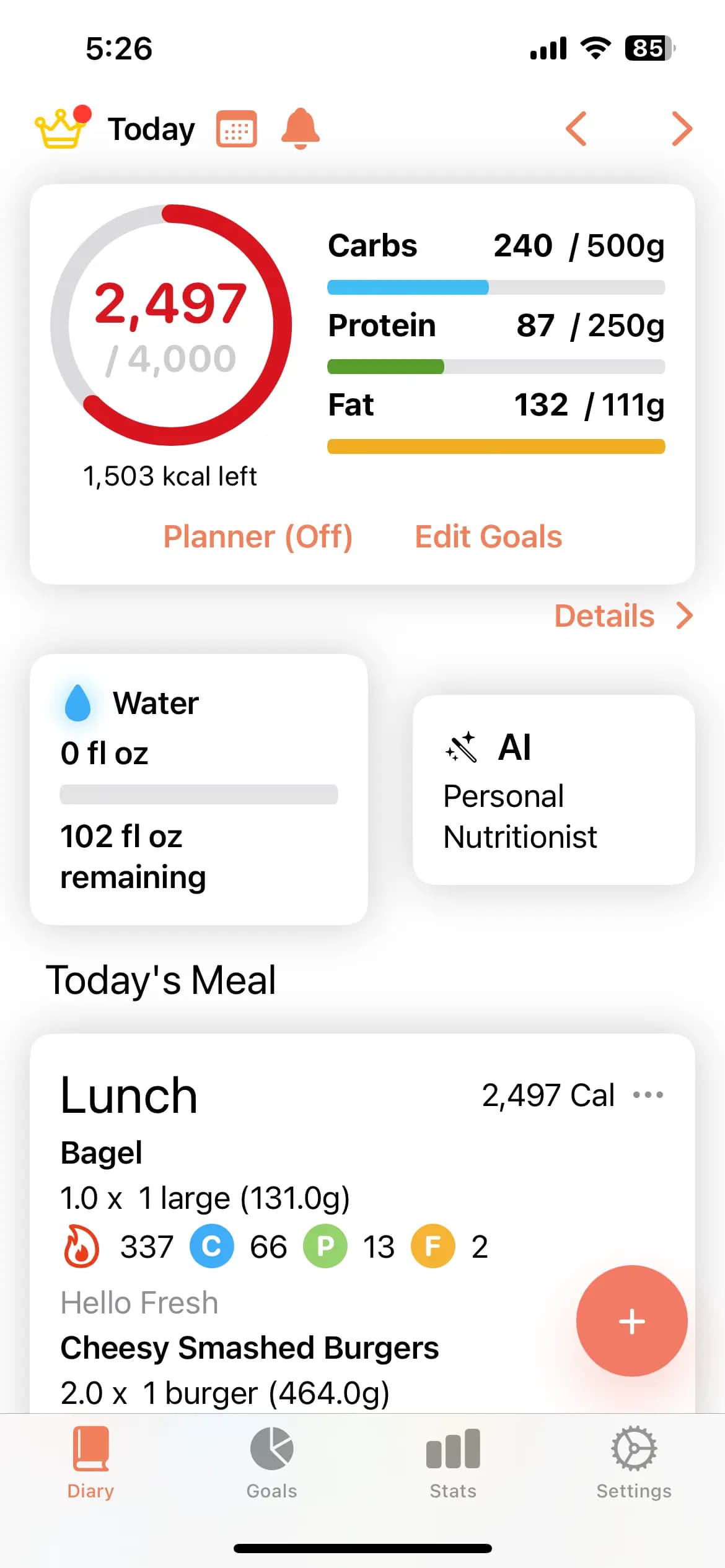
Log meals, check your macros, and stay close to your daily targets with Lilbite’s simple food tracker on iOS and Android.