Calorie Cycling Calculator
Turn your daily target into a weekly calorie budget, with more on the days you need it and less on the rest.
How this calorie cycling calculator works
The calculator estimates your maintenance calories with the Mifflin-St Jeor equation and your activity level, the same method as the TDEE calculator, or uses the number you enter. It then sets an average daily target for your goal:
- Lose fat: 20% below maintenance, the gentlest setting of the calorie deficit calculator.
- Maintain: your maintenance calories.
- Lean gain: 250 calories above maintenance, as in the bulking calculator.
That average times seven is your weekly calorie budget. Each high day gets the extra calories you choose, and the cost is spread evenly over the low days, so the weekly total, and your expected progress, stay the same as eating the average every day.
These are estimates. Your weekly weight trend is the real test of whether your calories are right. For medical conditions, pregnancy, or a history of disordered eating, talk to a registered dietitian before changing how you eat.
Planning by the Week, Not the Day
Your body responds to your average intake over days and weeks, not to any single day. A weekly calorie budget lets you match your eating to your real week: bigger meals at the weekend or on training days, lighter days when you are busy.
- Choose high days you can predict, such as weekends, long runs, or social plans, so the trade-off is planned rather than a reaction.
- Keep protein the same every day and let carbs rise and fall with your calories.
- Judge progress from your weekly average weight, since high days add temporary water weight.
What is calorie cycling?
Calorie cycling means eating more on some days and less on others while keeping the same weekly total. For example, instead of 2,000 calories every day, you might eat 1,860 on weekdays and 2,350 on Saturday and Sunday. Your weekly budget, and your expected progress, stay the same.
Does calorie cycling work better than a regular diet?
For fat loss, research generally finds results are similar when weekly calories are the same. The benefit is adherence: planning for weekends, social meals, or hard training days makes it easier to stay on track for the whole week instead of going over and feeling you have failed.
What is calorie banking?
Calorie banking is eating slightly less on some days to save calories for a planned bigger day, such as a weekend meal out. It is the same idea as calorie cycling: as long as the weekly total stays the same, the trade-off works.
How many high days should I have?
One or two a week suits most people, usually weekends or the days with the hardest training. More high days mean lower low days, so check the low-day number stays comfortable and above the safe minimum the calculator shows.
Is a high day the same as a refeed day?
Similar, but not quite. A refeed day usually means eating around maintenance, mostly from carbs, during a long diet. In this calculator a high day can be a refeed if you set the boost so the high day reaches your maintenance calories.
Why did my weight go up after a high day?
Extra carbs and salt make your body hold more water, so the scale often rises for a day or two. It is not fat. Compare weekly average weights instead of single weigh-ins.
Take your target with you
Turn today’s estimate into an everyday habit.
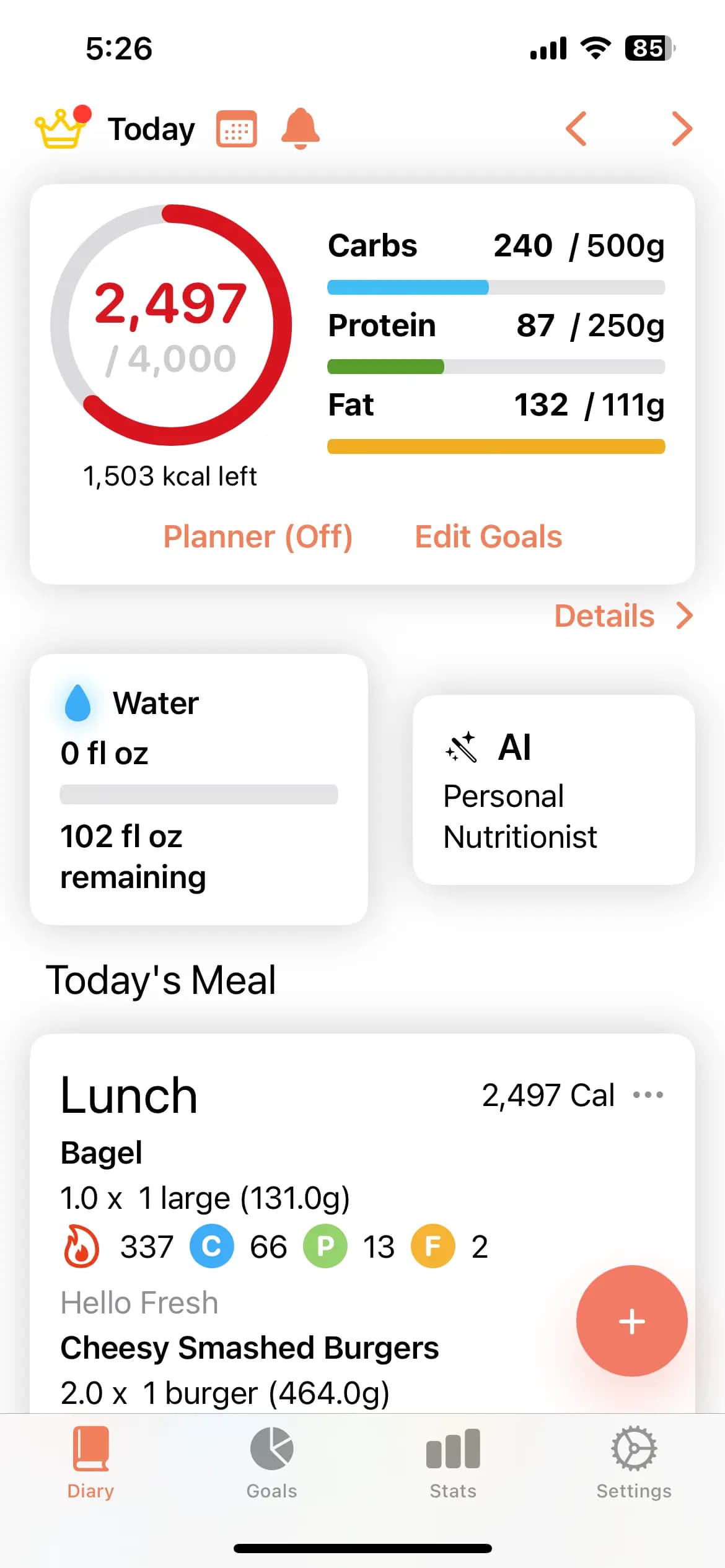
Log meals, check your macros, and stay close to your daily targets with Lilbite’s simple food tracker on iOS and Android.