Loading...
Best Macro Tracking App: Compare Features and Fit
L
Lilbite Team
Lilbite editorial team
The best macro tracking app for you should let you set protein, carb, and fat targets, adjust food portions, and reuse meals you eat regularly. Compare those controls before choosing based on database size or photo logging alone.
How to choose a macro tracker
Check whether the app lets you enter targets in grams, edit servings, save recipes, and review daily macro totals. Try logging one normal day, including cooking oil and drinks, to see whether the workflow fits your routine. Check the current plan details for the features you need.
Need targets first? Use the IIFYM calculator. New to logging? Follow how to track macros in four steps. For a broader view of food diaries and nutrition features, read the nutrition tracking app comparison.
Why Precise Macro Tracking Unlocks Fitness Results
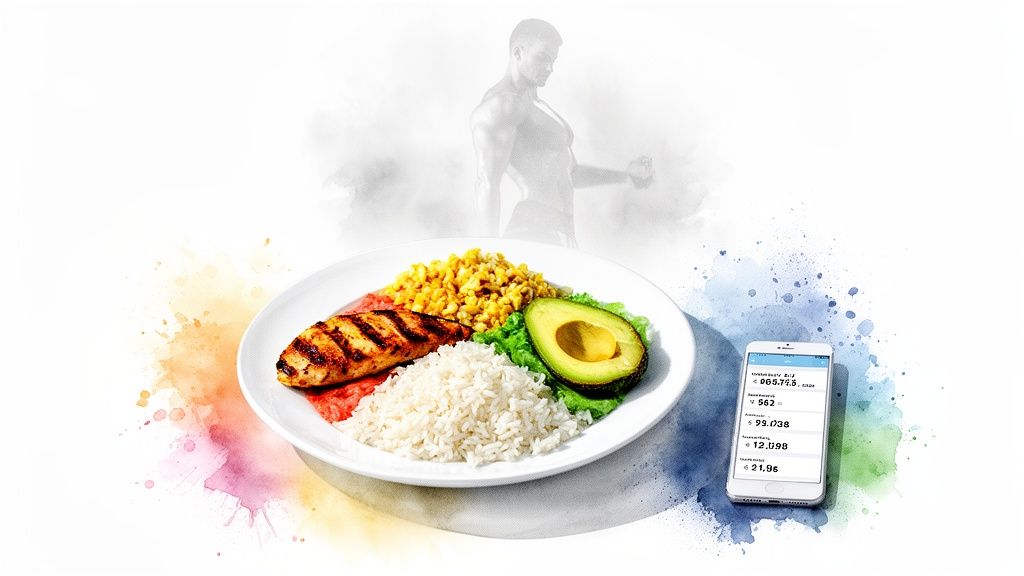
Counting calories is a decent starting point for weight management, but it only tells you half the story. Think of calories as the total amount of gas in your car's tank. Macronutrients—protein, carbs, and fats—are the type of fuel you're using. You can run on cheap, low-octane gas or premium fuel, and your car's engine will perform very differently.
Focusing on macros gives you a much more sophisticated way to dial in your nutrition, which is what directly impacts your body composition and how you perform in the gym. This approach, often called "If It Fits Your Macros" (IIFYM), is about eating the right balance of nutrients to get specific results—not just mindlessly restricting food.
For instance, hitting your protein target is critical for muscle repair and growth. Carbs are your body's go-to energy source for tough workouts. Healthy fats are essential for hormone production and overall health. When you optimize your macros, you stop guessing and start eating smarter to fuel your body for what you're asking it to do.
Fueling Your Body with Precision
Different goals demand different macro splits. Someone trying to bulk up and build muscle needs a completely different nutritional blueprint than an endurance runner who needs carbs for sustained energy. A generic calorie number just can’t account for that level of detail.
- For Muscle Growth: Prioritizing protein gives your body the raw materials it needs to build new muscle tissue. It also helps prevent muscle breakdown, even when you're in a calorie deficit.
- For Fat Loss: A balanced macro approach keeps you feeling full, crushes cravings, and helps you hold onto your hard-earned muscle. This ensures the weight you're losing is actually fat. Check out our guide on how to use a macro calculator for weight loss.
- For Performance: Athletes can tweak their carb intake to top off glycogen stores before a big race or a heavy lifting session, which directly impacts their energy and output.
Tracking macros gives you direct control over your body composition. You’re handing your body the exact resources it needs to build muscle, burn fat, or perform at its best. It turns nutrition from a guessing game into a precise science.
The Rise of Digital Nutrition Tools
This shift toward precision has created huge demand for digital tools. The global market for food tracker apps is exploding, valued at around $2 billion in 2025 with users logging billions of meals. That number is projected to skyrocket to between $8-12 billion by 2033, showing a massive trend of people turning to technology for real nutritional guidance.
That's why finding the best macro tracking app is so crucial. Modern apps have made a powerful dieting method—once reserved for elite athletes and bodybuilders—accessible to anyone with a smartphone and a goal.
What Makes a Macro App Genuinely Great?
Before we jump into a side-by-side comparison, let's talk about what actually separates a high-performance macro app from a simple digital food diary. They’re not all built the same, and the best macro tracking app for you hinges on a few key things working together perfectly. Knowing what to look for gives you a solid framework for deciding which app will actually help you get where you want to go.
The absolute bedrock of any great macro tracker is its food database. An app can have all the bells and whistles, but if its data is garbage, your tracking is fundamentally broken from the start. This is where the difference between user-generated and verified entries becomes so important.
The Power of a Verified Food Database
A massive database with millions of user-submitted entries sounds impressive on paper, but in reality, it's often a mess. One person's "grilled chicken breast" might have completely different macro values than the next, creating a minefield of potential errors that can throw off your entire day.
An app that prioritizes a verified database, on the other hand, pulls its information from official, professional sources like the USDA. This means the nutritional data for whole foods and standard products is accurate and reliable, every single time.
An app built on a verified food database removes all the guesswork. You can trust the numbers you're logging, which is non-negotiable if you're serious about seeing results.
Speed and Simplicity: The Key to Consistency
Let's be honest: consistency is everything. Nothing torpedoes consistency faster than a clunky, tedious logging process. If tracking your meals feels like a chore, you're not going to stick with it for long.
The best apps are built from the ground up to make logging fast and frictionless. Modern features that make this happen include:
- Barcode Scanning: Instantly pulls up nutrition info for packaged foods, saving you from manual entry.
- Photo Logging: Cutting-edge AI can analyze a picture of your meal, identify the foods, and estimate the macros for you.
- Voice Input: Lets you log your meals just by talking—a huge time-saver when you're busy or on the go.
When an app cuts the time it takes to log a meal from minutes down to seconds, it turns tracking from a burden into a sustainable habit you can actually maintain.
Customization and Goal-Oriented Features
Your nutrition needs aren't static; they change with your goals. The macros that work for a cutting phase are totally different from what you need for a bulk. A truly high-performance app has to offer deep customization to adapt to your journey.
This goes way beyond a simple daily calorie target. You need the ability to set and fine-tune specific targets for protein, carbs, and fats. A true hallmark of a genuinely useful app is the inclusion of built-in calculators for things like your Total Daily Energy Expenditure (TDEE) and Basal Metabolic Rate (BMR). You can see exactly how these work by playing around with a good online macro calculator to see how your own stats influence your targets.
Ultimately, the best macro app doesn’t just record what you ate. It gives you a complete toolkit, combining an accurate database with an effortless user experience and the flexibility to support your goals, no matter how they change over time.
Comparing the Top Macro Tracking Apps in Detail
Picking the best macro tracking app isn't about finding a single "best" one for everyone. It's about finding the right tool for you. The app store is flooded with options, from old-school giants to slick newcomers, and each one takes a different swing at helping you track your food. Instead of just listing features, we're going to break down four top contenders—MyFitnessPal, Cronometer, Lifesum, and Lilbite—and look at how they actually work for different fitness goals.
We'll dig deeper than the marketing claims. For instance, a huge food database sounds great on paper, but if half the entries are wrong, it can seriously derail your progress. This head-to-head comparison will give you the clarity you need to pick an app that actually fits your life.
If you want to see how these apps stack up against the broader world of health tech, checking out a guide on the best fitness apps of this year can provide some useful context.
MyFitnessPal: The Convenience King
MyFitnessPal (MFP) is the app most people try first, and it’s easy to see why. Its biggest strength is a gigantic food database, built by millions of users over many years. This means you can find just about anything, from a dish at your local restaurant to that weird snack you found at an international market. If you can eat it, it's probably in MFP.
But that convenience comes at a cost: accuracy. Because so much of the database is user-generated, it's packed with errors, duplicate entries, and incomplete nutritional info. For someone just trying to be more mindful of their eating, a few off numbers might not matter. But if you’re a competitive athlete or deep in a cut, those little mistakes add up fast. The free version is also drowning in ads, which really slows down the logging experience.
MyFitnessPal's Ideal User: The social dieter or beginner who just wants to log food easily. If your main goal is awareness and you eat out a lot, MFP’s massive database is tough to beat, even if you have to double-check the numbers.
Cronometer: The Data Scientist's Dream
While MyFitnessPal chases convenience, Cronometer is all about precision. Its power comes from a carefully curated and verified food database, pulling information from trusted scientific sources like the USDA. When you log an apple, you can trust that the data is spot-on.
This obsession with data goes way beyond just macros. Cronometer is fantastic for tracking micronutrients, giving you detailed reports on your vitamin and mineral intake. For an athlete fine-tuning their performance or anyone managing a specific dietary deficiency, this level of detail is a game-changer. The trade-off? The app has a bit of a learning curve, and its database won't have every obscure branded food you can find in MFP. The whole experience feels a bit more clinical.
Cronometer's Ideal User: The data-driven athlete or nutrition nerd who refuses to compromise on accuracy. If you track your vitamins, follow a therapeutic diet, or just want the most reliable data possible, Cronometer is the clear winner.
Lifesum: The Lifestyle and Wellness Choice
Lifesum has carved out its own space by focusing on the bigger picture of health, not just crunching macro numbers. It has a beautiful, friendly interface that feels more encouraging and less like a science project. Its real standout feature is the built-in support for specific diets like Keto, Vegan, or Paleo, complete with tailored recipes and meal plans to guide you.
This app is less about hardcore analytics and more about building healthy, sustainable habits. It even includes a water tracker and a "Life Score" to give you a holistic view of your wellness. Sure, it tracks macros just fine, but its heart is in helping you find a balanced lifestyle. It might not have the deep data tools a bodybuilder needs, but for someone just starting their health journey, it’s a perfect fit.
Lifesum's Ideal User: The health-conscious person focused on overall wellness and building good habits. If you're trying out a diet like veganism and want an app that offers inspiration alongside tracking, Lifesum is an excellent choice.
This flowchart really breaks down the three pillars of a great macro app: the food database, the logging experience, and your ability to set clear goals.
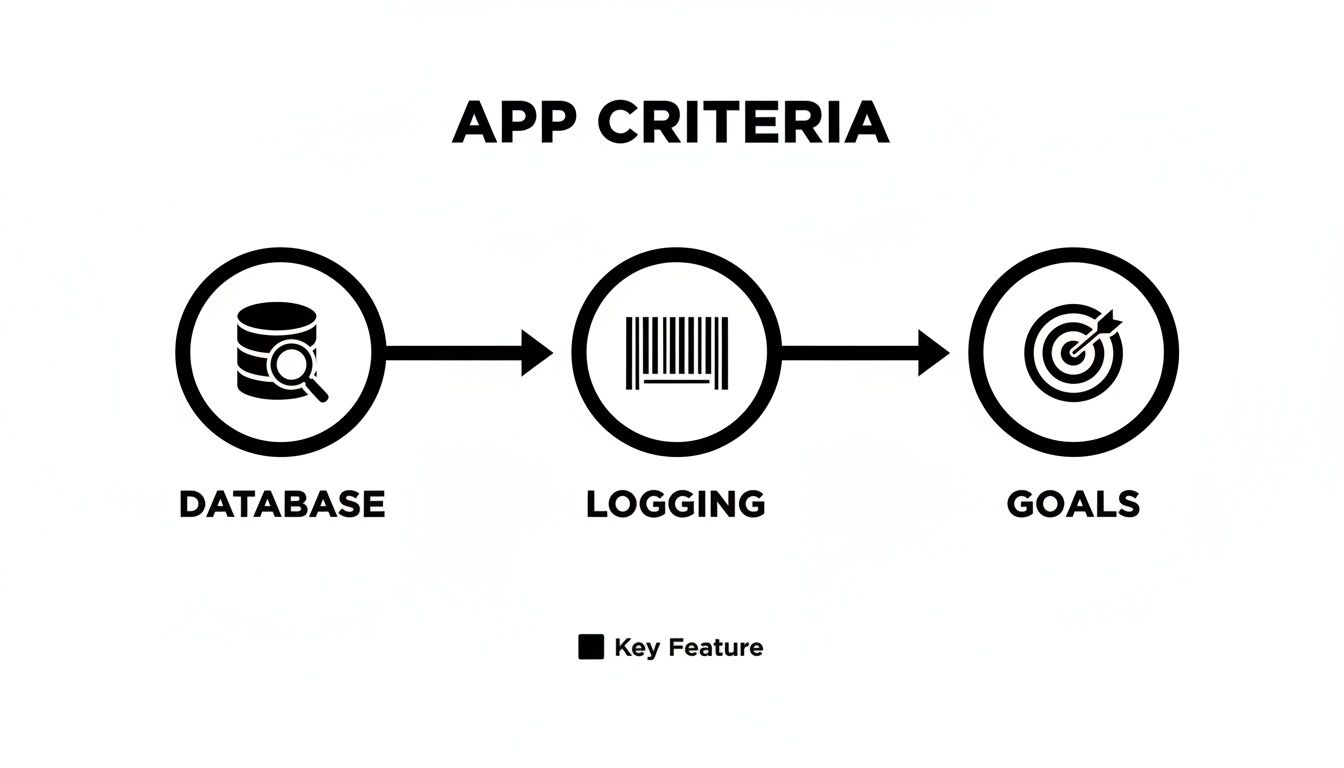
Get these three things right, and you have an app that's not just accurate, but one you'll actually stick with long enough to see results.
Lilbite: The AI-Powered Innovator
Lilbite jumps into the ring by tackling the single biggest reason people quit tracking: the sheer tediousness of logging every single thing you eat. It's built from the ground up with a smart AI engine designed to make tracking fast and almost effortless. The "Snap & Analyze" feature is a perfect example—just take a photo of your meal, and the AI figures out what's on your plate and estimates the macros. What used to be a five-minute chore is now done in seconds.
This AI-first thinking shows up everywhere. The "Talk to AI" feature is like having a nutritionist in your pocket. You can ask it things like, "What's a good high-protein lunch under 400 calories?" and get instant suggestions. By pairing this slick tech with a verified USDA database for accuracy, Lilbite bridges the gap between MyFitnessPal’s convenience and Cronometer’s precision. It feels built for today's user—someone who expects technology to be smart, fast, and genuinely helpful.
Lilbite's Ideal User: The tech-savvy fitness enthusiast or busy professional who demands accuracy but doesn't have time to waste. If you've given up on tracking before because of the hassle, Lilbite's AI is designed to eliminate that friction.
To make things even clearer, here's a side-by-side look at how they all stack up.
Macro Tracking App Feature and Price Comparison
This table cuts right to the chase, comparing the core features, strengths, and costs of the top contenders so you can see the key differences at a glance.
| Feature | Lilbite | MyFitnessPal | Cronometer | Lifesum |
|---|---|---|---|---|
| **Best For** | AI-driven speed & accuracy | Maximum convenience | Data precision & micronutrients | Lifestyle & habit building |
| **Database Quality** | Verified USDA | Massive (User-Generated) | Verified (USDA, NCCDB) | Good (Verified & User-Added) |
| **Key Feature** | AI Photo Logging & Assistant | Largest Food Database | Detailed Micronutrient Tracking | Guided Diet Plans & Recipes |
| **User Experience** | Fast & Intuitive (iOS) | Functional but Ad-Cluttered | Data-Rich, Clinical | Beautiful & Encouraging |
| **Ideal User** | Busy individuals seeking efficiency | Social dieters, beginners | Athletes, nutrition nerds | Wellness seekers, dieters |
| **Free Version** | Generous with core AI | Limited, heavy with ads | Very capable, detailed | Good, but pushes premium |
| **Subscription** | Unlocks advanced AI insights | Removes ads, adds features | Gold unlocks recipes, planner | Unlocks all diet plans |
At the end of the day, the best macro tracking app is the one you’ll actually use day in and day out. By understanding these real-world differences, you can pick the tool that not only supports your goals but also clicks with your personality and lifestyle.
How Lilbite Uses AI to Make Nutrition Tracking Effortless
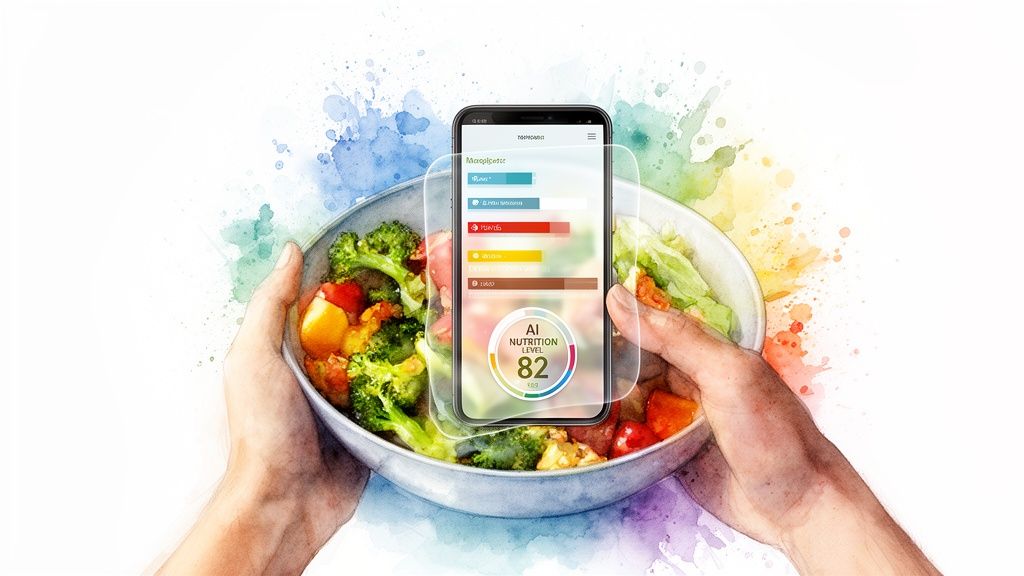
While most apps are just digital food diaries, Lilbite was built from the ground up around artificial intelligence. This isn't just about tacking on a few cool features. It's a complete rethink of the entire tracking process, designed to crush the single biggest reason people give up: friction. The goal is to make logging your food so quick and painless that it becomes a simple habit, not a daily chore you dread.
This focus couldn't come at a better time. The market for diet and nutrition apps is exploding, projected to jump from $5.95 billion in 2025 to a massive $27.73 billion by 2035. This growth is driven by people wanting smarter, more personalized tools—apps that can figure out protein needs or suggest meals on the spot. You can dig into the numbers and what's fueling this trend in this detailed healthcare industry analysis.
Lilbite is right at the heart of this shift, using smart tech to solve the most annoying parts of tracking. It turns tedious tasks into quick, simple actions that actually help you move closer to your goals.
Snap and Analyze Photo Logging in Action
Let's be honest, the biggest pain in macro tracking has always been the mind-numbing task of entering every single ingredient. Lilbite’s Snap & Analyze feature tackles this problem head-on. Instead of manually searching for "grilled chicken breast," then "quinoa," then "broccoli," you just take a picture of your plate.
The AI instantly goes to work, identifying everything on your plate, estimating the portion sizes, and giving you a complete macro breakdown. What used to take minutes of typing and scrolling is now done in seconds. It’s a subtle shift, but it completely changes the dynamic, turning logging from something you do after you eat into an effortless habit.
For example, you can snap a photo of your post-workout meal and have the protein, carbs, and fats logged before you even take your first bite. For anyone who has struggled with consistency, this seamless workflow is a total game-changer.
Making Smarter Choices with the AI Nutrition Level
Logging what you ate is one thing; understanding if it was a good choice is another. Lilbite gives every meal you log an AI Nutrition Level score, which is a simple rating that shows how well that meal aligns with your specific goals. It’s like getting instant, actionable feedback.
Imagine you're trying to decide between two lunch options while you're out. You can snap a picture of each to see which one has a better balance of protein and healthy fats for your cutting phase. The AI score acts as a quick gut check, empowering you to make better decisions in the moment without getting lost in the numbers.
Lilbite's AI doesn't just record your past choices; it actively guides your future ones. The Nutrition Level score transforms data into immediate, easy-to-understand advice, helping you learn what a truly balanced meal looks like for your body.
Your Personal Nutritionist with Talk to AI
Maybe the most powerful feature is Talk to AI. It’s basically like having a nutrition expert in your pocket, ready to answer questions 24/7. This isn't just a simple chatbot; it's a conversational AI that can handle complex questions and give you personalized advice based on your own data.
Instead of falling down a Google rabbit hole, you can just ask.
- Meal Planning: "Suggest a high-protein, low-carb lunch under 500 calories."
- Food Comparisons: "Which is better for building muscle, Greek yogurt or cottage cheese?"
- Goal Adjustments: "I missed my protein target yesterday. What should I eat for breakfast to catch up?"
This takes the app from a simple tracker to a genuine nutrition coach. It helps you solve the little dietary puzzles that pop up every day, making it much easier to stay on track when life gets hectic. To see how these tools come together, check out the features on the Lilbite app homepage.
By pairing these genuinely useful AI tools with a solid foundation—a verified USDA database and a clean iOS experience—Lilbite stands out. It's the best macro tracking app for anyone who values both precision and their own time. It's built for people who expect technology to do the heavy lifting for them.
How to Choose the Right App for Your Fitness Goal
An app’s features are only useful if they actually help you reach your goals. Picking the best macro tracking app isn’t about finding the one with the longest feature list; it’s about finding a tool that slots perfectly into your life, whether you’re just starting out or prepping for a competition. A feature that’s a game-changer for a bodybuilder might just be useless noise for someone focused on sustainable weight loss.
This is exactly why a one-size-fits-all recommendation never really works. The perfect app for a beginner needs to be simple and encouraging. An elite athlete, on the other hand, needs granular data and uncompromising accuracy. Let’s walk through a few different scenarios to see which apps shine for specific goals.
The Beginner Focused on Sustainable Weight Loss
For anyone new to tracking macros, the biggest wall you’ll hit is consistency. The whole process has to feel simple and rewarding, not like a chore. If you’re buried under a complex interface or a database full of confusing options on day one, you’re going to burn out. The real goal here is building a habit, not analyzing micronutrient ratios from the get-go.
For this, an app like Lifesum or Lilbite is a fantastic choice. Lifesum offers gentle guidance and diet plans in a beautiful interface that makes tracking feel less intimidating. Lilbite comes at the consistency problem from a different angle with its AI photo logging. It turns a tedious task into a quick snapshot, making it way easier to stick with long-term.
The Bodybuilder Perfecting a Cut or Bulk
Bodybuilders and serious lifters play a completely different game. Precision is everything. During a cut, every single gram of protein, fat, and carbs counts. When bulking, the goal is to hit a specific surplus without adding unnecessary body fat. For this kind of person, data accuracy is absolutely non-negotiable.
Cronometer is the undisputed king here. Its database is built on verified, scientific sources, which means you can trust the numbers without question. That level of precision is critical when a tiny miscalculation can set you back weeks. The detailed micronutrient tracking is also a huge plus for making sure your health doesn’t take a backseat during extreme diet phases.
For a competitive athlete, a macro app isn't just a food diary—it's an essential piece of equipment. Accuracy isn't a "nice-to-have." It's the entire foundation of their nutrition strategy.
The Performance Athlete Optimizing Fuel
Endurance athletes, CrossFit competitors, and other performance-focused individuals need more than just macro totals. They’re obsessed with nutrient timing—getting carbs in before a workout and replenishing with protein right after. They also need to keep an eye on electrolytes and other micronutrients that directly impact their energy and recovery.
Once again, Cronometer is a top contender because of its detailed, verified data. But an app like MyFitnessPal can be surprisingly useful for this group, too, just for a different reason. Its massive user-generated database often has specific sports nutrition products—gels, bars, electrolyte mixes—that you might not find in smaller, more curated databases. The trick is to double-check the entries when precision really matters.
The Health-Conscious Home Cook
This person is all about overall wellness. They want to understand the nutritional value of the meals they cook from scratch. They love experimenting with recipes and want to make healthier swaps, like figuring out the macro difference between quinoa and rice or understanding the fat content in various cooking oils.
This is where Lilbite has a unique edge. Its "Talk to AI" feature is perfect for asking practical questions like, "How can I add more protein to my chili recipe?" The AI Nutrition Level score also gives instant feedback on how balanced a meal is, helping people learn and improve their cooking habits over time.
This kind of targeted approach is becoming more important as the digital fitness market explodes. Macro tracking is a huge piece of this pie, with the overall digital fitness app market valued to hit $15.35 billion in 2026 and climb to $28.30 billion by 2031. To discover more insights about the digital fitness app market, you can see just how fast things are growing. When picking an app, it's smart to see how it fits into the bigger picture of fitness tech, like exploring the best fitness apps for iOS to see how macro tracking works with other health tools.
Common Questions About Macro Tracking Apps
Diving into the world of macro tracking always brings up a few questions. Maybe you're wondering if a paid subscription is actually worth the money, or you're questioning just how reliable the nutrition data really is. Getting these things straight is the key to building confidence and sticking with it long-term.
Let's cut through the noise and tackle the most common questions people have when picking out a macro app.
Is It Worth Paying for a Macro Tracking App?
This is the big one. While the free version of most apps gets you in the door, the premium subscription is what really unlocks the features that drive serious progress. Think of it like this: the free app is a test drive, but the paid version is like adding the high-performance engine and a top-of-the-line GPS.
Paid benefits usually include things like advanced metric tracking, detailed micronutrient data, unlimited barcode scanning, and genuinely useful AI tools like photo logging. For anyone with a specific goal—whether that’s competitive bodybuilding, athletic performance, or managing a strict diet—the time saved and the precision you gain from a paid app is a huge return on investment. The advanced tools just help you get where you're going, faster.
A premium app subscription is an investment in your own efficiency and accuracy. It removes the daily friction from tracking, which is often the biggest reason people give up.
How Accurate Are the Food Databases in These Apps?
An app’s accuracy lives and dies by the quality of its food database. This is probably the single most critical piece of the puzzle, since bad data makes every calculation pointless. Apps that lean too heavily on user-submitted entries are often a mess of errors, duplicates, and incomplete info.
The most reliable trackers, like Cronometer and Lilbite, make it a priority to use verified databases from official sources like the USDA. This ensures that the nutritional information for whole foods and standard products is spot-on. For packaged items, your best friend is the barcode scanner, which pulls data straight from the manufacturer.
No app is going to be 100% perfect for every obscure local dish or grandma's secret recipe, but choosing one with a verified database makes a night-and-day difference in the quality of your tracking from day one.
Can an App Alone Help Me Build Muscle or Lose Fat?
A macro tracking app is an incredible tool, but it's a navigational tool, not an autopilot system. It gives you the critical data and awareness you need to match your nutrition to your goals, but it can’t do the heavy lifting for you. It's like having the perfect map and compass—they're essential for finding your way, but you still have to hike the trail.
Real results, like building muscle or losing fat, demand consistent action. You have to actually use the app's guidance to hit your targets day in and day out, and you need to pair that with a solid training plan. The app is your blueprint and your accountability partner; your consistency is what actually builds the house.
Ready to stop guessing and start tracking with AI-powered precision? Lilbite makes logging effortless with photo analysis and gives you a personal nutrition assistant right in your pocket. Download Lilbite on the App Store today and see how simple hitting your goals can be.
Generated with Outrank